
I use a very simple tool, so simple you could almost call it an Anti-Planner, to keep track of what I need to do each day. It took a long time to realize it’s all I really needed.
Agendas and Planners
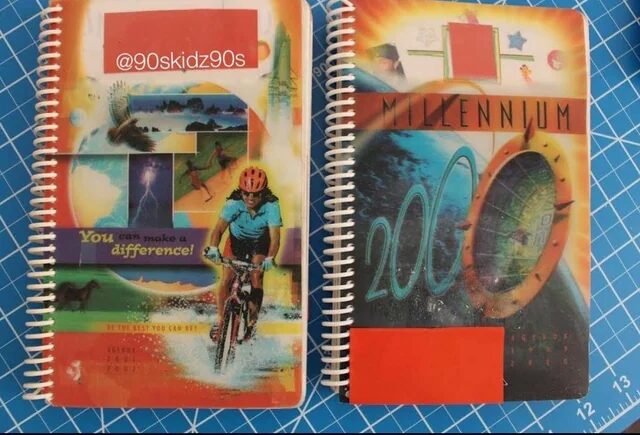
They handed me a spiral notebook my first day as a high school freshman. The teacher called it an “agenda”. Had a textured plastic cover and smelled like a freshly opened box from Best Buy. The artist, trying desperately to leave the 90’s behind him, had not understood that this desire itself only more firmly entrapped him in the decade. Every two pages showed off a week and no instruction was ever needed to understand the purpose. Before our first homeroom was over, I had listed all of the classes I would need to attend each day and their room numbers. The first week, I even wrote down assignments and a few notes, though by the end of September that year, it was mostly a collection of random drawings I took to distract myself from the boredom of English 101.
All of this is to say that the idea of a planner was not something I sought out, but something thrust into my life. I used it on and off. Everyone did, for a little while, every year. There was never any real consistency for me, though. I never much liked the rigidity of it. And then, I entered college, and within a few years, caught the productivity bug. I plan on writing about the problems of the Productivity Cult, as I’ve deemed it, in the future. The point for now is that I began to take the idea of a planner to its logical extreme. If it was good to plan out some of my time in that old high school agenda I neglected, then as I entered maturity, it would be even better to plan out every part of my life. A calendar listing every event and thing I had to do. Task lists, long-term task spreadsheets, projects, notes. Charts and graphs. Metrics and data.
It started humbly enough with paper notebooks and printed addendums and graph paper for tables. I’d use the school printer to make a stack of pages and then slowly clip ten or twelve at a time with a three-hole-punch. A big stack of papers in a three-ring binder, first plastic, then leather when I got fancy. And just as in my high school years, I began the planner in earnest only to drop off and end up with hundreds of empty pages.
This process of starting ambitiously with a planner and then falling away from it within a few weeks, continued into my career. Sometimes I’d print a notebook. Sometimes I’d buy one. I even used to fill in all those little details at the front, thinking I’d look back on it someday. I never did. Something must have been wrong with me to continue to fail at this, and I began to look online for techniques to solve my problem. I began using digital tools. Online task trackers, project management, and more. Real spreadsheets now, too. I’d set up alerts to remind me to do things. Time tracking apps to make sure I was focused on the right things. And then I discovered the dream technology I had been looking for. I discovered Notion.
The Good vs the Perfect
I had always been searching for a way to organize projects, tasks, documents, calendars, goals, and routines in one place. I wanted everything to link to everything else. I wanted to be able to look at a task in a task list that said “buy milk” in a list called “grocery shopping” assigned to a routine called “buy groceries” under a goal called “build a home”. I wanted to be able to look, at a glance, at the five dozen projects I was working on, from software to writing to home repairs, and know what percentage of tasks were complete, what was blocked, and what I needed to do next.
I was looking at my life as a project manager looks at a piece of software.
Notion fit the bill. Intrinsic to Notion is the database. Not a table, mind you, but a structure that allows you to put disparate data into organized rows, filter the data, and link it like a true database to other tables. I could finally create a Project database linked to a Task database and a Goal database and flow data across through linking to know why I was doing every little thing I planned to do.
I finally had what I wanted. And I was miserable.
The Problem
One midwinter day, I threw it all out. I got rid of all of my planners. All of my lists. I deleted every service I ever signed up for except Notion. There was too much information in Notion to just throw it all away, but I turned it off and didn’t look at it for several months. Through winter and spring, I didn’t touch any of my systems. I didn’t look up techniques. I completely divorced myself from the Productivity Cult. And you know what? Nothing bad happened, and I was happier.
You and I are human beings, and human beings are not machines. I have to say this, because although we obviously know this, we don’t always act like it. Our purpose isn’t to be maximally efficient. Our lives aren’t about getting things done, even if we sometimes must get things done. It’s never the point. The problem is that when you treat your life like a product, you dehumanize yourself and everyone around you. When you do this long enough, and you are under pressure from work or relationships or finances, your whole system will collapse. It can’t handle the stress, because it’s inhuman.
I was happier, and the desire to be maximally efficient and productive died, and in its place I wanted to simply live a good life, in the classical sense. I began spending much more time with my wife and kids and friends.
However, I noticed I would forget things. I wouldn’t remember what I needed to do on certain days. My old overplanning may not have worked to get things done that needed doing, but I couldn’t say I had forgotten something. There was no way I’d ever go back to that, but could I fix this smaller problem? It turns out, I could.
The Anti-Planner
If you’re ready to ditch the life of technique and system and live a little more fully, toss all of your tools and planners aside and try something new.
Head to your nearest big box store. Walmart, Target, Meijer, Kroger, whatever it is. Head to the notebook section and find a small leatherbound notebook. I prefer Markings and Think Ink enough that if I can’t find one of these two in the store, I buy them online. Whatever you do, make sure the material is real leather; the fake stuff likes to dissolve over time.
Take your new notebook and a nice pen and sit down at the table. On the first page, write “New Week” in big letters at the top, followed by the date of next Sunday and the date of the following Saturday. Something like “March 10 through March 16”. On the following seven pages, right the date, e.g. “Sunday, March 10” and “Monday, March 11”, and so on. Do this until you hit the Saturday, which will be a left-hand page. Now, repeat. Do this for 2-4 weeks, but no more. Never more than that.
Now, every Friday, list out the things you need to do the next week. If you have more than you can fit on a page, you have too much. Cut back. Don’t list every little thing you want to do. I list my work meetings first. Big events, like my children’s birthdays go at the top, above the date. I try to average 5-10 lines a day at most. List out the big things you need to keep in mind or do on the page for the week.
Now, close your notebook. Set it down. Don’t look at it again until the next day. Each day, check the current day and don’t look ahead unless you need to change something. You don’t want to live in the past or the future. You’ve already planned next week (if it’s Friday, Saturday, or Sunday), or you will plan next week later. What’s the point in looking ahead except to exhaust your mind on things you can’t do anything about?
With your day “filled”, make sure you get done what you need to. There are no shortcuts here, but this list isn’t overwhelming now that you’ve taken the precautions above. It’s a short list. It’s just today. When you’re done, you’re done.
With the rest of your time, do whatever you like. Let the interruptions of the day be interesting rather than frustrating. Add a bit more spontaneity. Take your kids to a park; you don’t need to plan on doing it, just go do it if the weather is nice.
Why it Works
We like to think that by planning our days to the minute, we are in control, but we aren’t. We’ve put a system in control of our lives. It might work for machinery, but could never work for a human being.
What I’ve proposed above is less a system and more a method to keep track of important things you need to remember. You should do what works for you, and have at most a loose attachment to any of these this ideas, but I have found them to be enormously helpful in my life.
Leave a Reply